The Geography of Ethics: Why Where You Do Surrogacy Matters More Than You Think
By Pineapple Family, Co-founders ·
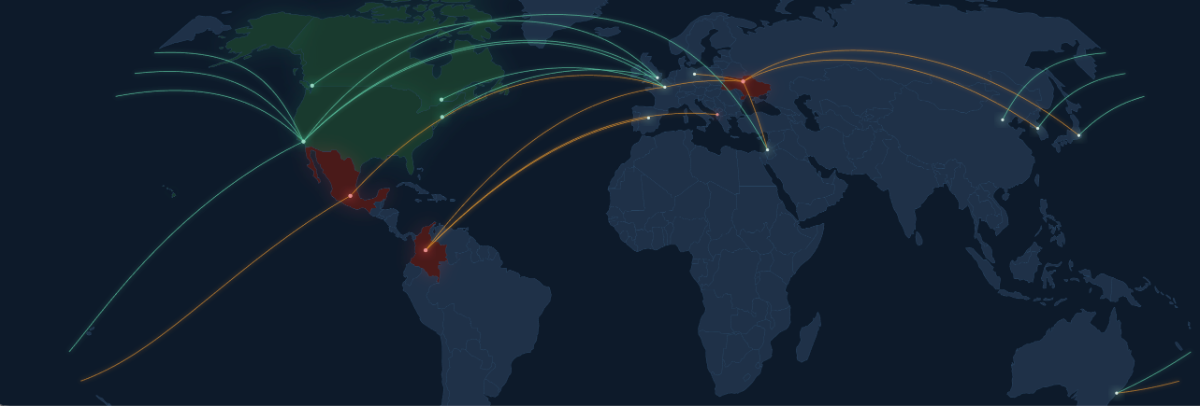
And why international families coming to the U.S. should feel good, not guilty, about their choice.
Every week in online surrogacy communities, a version of the same conversation plays out. A hopeful parent, maybe a couple in London, a single dad in Sydney, or a family in Berlin, asks the group: "Has anyone done surrogacy in Colombia? Mexico? Ukraine? The U.S. is just so expensive."
The responses pour in. Success stories. Horror stories. Cost breakdowns. Agency recommendations. And somewhere in the thread, inevitably, someone raises the question nobody wants to sit with for too long: Is this ethical?
It's an uncomfortable question. It's also the right one.
Because where you pursue surrogacy isn't just a financial decision. It's an ethical one. The legal protections, medical standards, and human rights of the woman carrying your child vary enormously depending on the country, and in some of the most popular international destinations, the picture is troubling.
At the same time, this conversation has an often-overlooked flip side. International intended parents who do choose to come to the United States for surrogacy sometimes carry their own ethical anxiety: Am I exploiting someone? Is commercial surrogacy inherently wrong? Should I feel guilty about this?
The answer, in the U.S., is no. Here's why.
The Offshore Reality
Colombia: "Altruistic" in Name Only
Colombia has become one of the fastest-growing surrogacy destinations in the world, particularly for European intended parents. Programs advertise total costs between $60,000 and $75,000, a fraction of U.S. pricing.
On paper, Colombian surrogacy is altruistic. The country's Constitutional Court has ruled that surrogacy must be non-commercial, meaning surrogates should not profit financially from the arrangement.
In practice, we believe this is a legal fiction.
A 2025 investigative report by La Marea found that compensation routinely reaches twice the national minimum annual wage, that recruitment has become its own parallel industry with recruiters earning commissions per pregnant woman, and that some legal experts warned certain recruiting practices may constitute human trafficking under Colombian law. According to the report, the Constitutional Court has urged Colombia's Congress to pass surrogacy legislation six times since 2009. Congress has not acted. No government authority oversees compliance with even the existing guidelines.
What does this mean in practice? It means the woman carrying your child may have been recruited through social media by someone earning a commission on her body. It means the "altruistic" label on her contract may be masking a commercial arrangement with none of the protections that regulated commercial surrogacy provides. It means no one is checking whether she was coerced by economic desperation, whether she received independent legal advice, or whether the clinic followed the court's screening requirements.
And increasingly, it means some Colombian surrogates are being recruited to travel abroad, to Albania, for example, for embryo transfer and birth, adding cross-border trafficking risks to an already unregulated system.
It's also worth noting that the U.S. State Department has downgraded Colombia to Tier 2 on its Trafficking in Persons report, citing inadequate victim services and insufficient enforcement, the very infrastructure that surrogacy's most vulnerable participants depend on.
Mexico: A Patchwork With No Safety Net
Mexico's surrogacy landscape varies dramatically by state. According to published legal analyses, only Tabasco and Sinaloa have clear legal frameworks permitting surrogacy for foreigners, and even those frameworks are evolving rapidly. Most other states either prohibit surrogacy, have no legislation at all, or exist in legal gray zones.
Programs commonly advertise costs between $56,000 and $80,000, and the medical care at top Mexican fertility clinics can be excellent. But the legal infrastructure underneath those programs is fragile.
Here's the pattern that should concern every intended parent: surrogacy becomes popular in a country with weak or absent regulation. Demand surges. Agencies multiply. Ethical standards vary wildly. Then something goes wrong, an exploitation scandal, a political shift, a media exposé, and the government cracks down. Overnight, surrogacy is banned or severely restricted, and families mid-journey are stranded.
This has happened in India, Thailand, Nepal, Cambodia, and Argentina. Each time, the people caught in the middle, pregnant surrogates and panicking intended parents, paid the price for a regulatory vacuum that everyone knew existed but nobody addressed until it was too late.
Industry observers watching the Mexican market have raised similar concerns. Surrogacy demand has grown rapidly, regulation hasn't kept pace, and one high-profile scandal could trigger the same crackdown cycle. If you're in month five of a pregnancy when that happens, there is no safety net.
Ukraine: Surrogacy in a War Zone
Before Russia's invasion, Ukraine was one of the largest surrogacy markets in the world, with an estimated 2,000 surrogate births per year across dozens of fertility clinics. Low costs, around $30,000–$60,000+ total, and permissive laws for married heterosexual couples made it a popular choice, particularly for European families.
The ethical concerns existed long before the war. Ukraine is one of the poorest countries in Europe, and economic desperation has always been the primary driver of surrogate recruitment. Reports of exploitative conditions, restrictive contracts, and inadequate support for surrogates have been documented for years.
The war has made everything worse. In January 2026, Israel's Justice Ministry issued a formal warning urging citizens to avoid surrogacy in Ukraine entirely, citing documented cases of severe violence against surrogates, draconian contracts that restrict women's movement, forced medical procedures without consent, and exploitation of particularly vulnerable women, including those well above the medically recommended age for surrogacy and those in extreme financial distress.
The warning also flagged a disturbing practice: foreign women being brought to Ukraine solely for surrogacy procedures, women who don't speak the language, have no legal status in the country, and lack any familial or social support.
Some contracts are signed only after the surrogate has already begun medical treatments or even after embryo transfer, meaning consent is effectively given under duress, when the woman has no real ability to walk away.
And this is all happening in a country under active bombardment, where surrogates have sheltered in basements during shelling and babies have been stranded when intended parents couldn't enter the country.
Why People Go Offshore Anyway
If you read the section above and felt uncomfortable, that's the appropriate response. But it's also important to understand why families make these choices, because it's rarely about indifference to ethics.
The primary driver is cost.
U.S. surrogacy through a traditional agency commonly runs $130,000 to $250,000 or more when you add up agency fees, surrogate compensation, legal costs, medical expenses, and insurance. For many families, including middle-class couples in the U.S. and abroad, that number is simply beyond reach. When someone presents a $60,000 alternative in Colombia or Mexico, the math feels like it answers itself. Especially when you've been told surrogacy is the only path to the family you've dreamed of.
The irony is that a significant chunk of that U.S. cost differential isn't medical care, legal fees, or surrogate compensation. It's agency fees. Many traditional agencies charge $30,000 to $60,000+ or more for matching and coordination services. That single line item is often the difference between an affordable journey and an impossible one, and it's the reason some families feel forced to look offshore.
In our view, this is the part the industry doesn't want to talk about: inflated agency costs in the U.S. are not just a pricing problem. They're an ethical problem. Every family that goes to Colombia, Mexico, or Ukraine because they can't afford the American agency markup is a family that the system failed. And the woman who carries their child in a country with weaker protections pays part of the price.
The Ethical Case for North American Surrogacy
Now let's flip the lens. If you're an international intended parent considering surrogacy in the United States or Canada, from Europe, Australia, Asia, or anywhere else, you may carry your own ethical concerns. You've read the Vatican's condemnation. You've seen the European Parliament resolution. You may come from a country where all surrogacy is banned. Perhaps friends or family have questioned whether commercial surrogacy is inherently exploitative.
Here's what we want you to know: in our view, choosing surrogacy in North America is one of the most ethically sound decisions you can make in this space. The United States and Canada are the global standard for surrogate protections, medical excellence, and legal clarity, though they take meaningfully different approaches.
Canada: Strong Protections, Real Tradeoffs
Canada deserves genuine credit. The Assisted Human Reproduction Act makes it a federal crime, punishable by up to $500,000 in fines or ten years in prison, to pay surrogates beyond documented reasonable expenses. Canadian surrogates are covered by universal healthcare, receive independent legal counsel, and several provinces have clear parentage legislation inclusive of LGBTQ+ families and single parents. The medical standards are world-class.
The altruistic model also makes a powerful ethical argument: Canadian surrogates aren't in it for the money. They step forward knowing they won't receive significant financial compensation, because they genuinely want to help another family. That's admirable, and it puts to rest any suggestion that these women are being exploited.
But there's a harder question worth asking, one that rarely gets raised in polite surrogacy circles: Who decides what a woman's physical sacrifice is worth?
Surrogacy is not a favor. It's an extraordinary physical undertaking. Months of hormone injections. The discomfort, exhaustion, and medical risk of pregnancy. Potential complications: gestational diabetes, preeclampsia, emergency cesarean delivery. Weeks of recovery. The lasting physical changes that come with carrying and delivering a child. Time away from her own family, her own career, her own life.
Every other professional in the surrogacy process gets paid. The fertility doctor. The psychologist. The attorney. The agency coordinator. The only person whose compensation is criminalized is the woman doing the most physically demanding and personally sacrificial work of all.
Canada's altruistic model protects surrogates from exploitation, and that's laudable. But there's a difference between protecting a woman from exploitation and telling her that the government, not she herself, gets to decide what her body, her time, and her risk are worth. Whether you view that as protective or paternalistic probably depends on how much you trust women to make their own informed decisions. We trust them.
For international families, Canada remains an excellent and ethical choice, particularly if you're philosophically aligned with the altruistic model or if your home country's legal framework makes the Canadian approach easier to navigate. Wait times can be longer since fewer women volunteer without financial incentive, and total costs according to industry estimates typically run $60,000-$100,000+ CAD.
But this article, and our platform, is focused on the United States, where we believe the regulated commercial model offers the strongest combination of surrogate empowerment, legal certainty, and accessibility for families worldwide. Here's why.
American surrogates choose this freely, and they're protected when they do
The typical American gestational carrier is not a woman in economic desperation. Research consistently shows that U.S. surrogates are predominantly middle-class women, often married mothers who have completed their own families, who are motivated by a genuine desire to help others build theirs. Military spouses are notably represented in the surrogate population, with industry estimates commonly citing 15% to 20%, not because they're exploited, but because, as sociologist Elizabeth Ziff found in her research, they bring a specific "tool kit and skill set" from their military spouse experience that translates well to the surrogacy process. They are compensated, with base pay commonly ranging from $45,000 to $65,000 according to industry data, and that compensation is not shameful. It's recognition of the extraordinary physical and emotional commitment surrogacy requires.
U.S. surrogates have independent legal representation. They sign contracts they understand, in their own language, with their own attorney reviewing every clause. They can negotiate terms. They retain bodily autonomy throughout the pregnancy. They receive comprehensive health insurance, life insurance, and psychological support. They cannot be confined, restricted from travel, or forced into medical procedures against their will.
None of these protections are guaranteed in Colombia, Mexico, or Ukraine. Some are actively violated.
But not all U.S. journeys are created equal
A disclosure before we go further: Pineapple Family is a family-building platform. We built it because our founders believe the independent model produces better outcomes for surrogates and intended parents alike. Two of our co-founders, Joshua and Daniel, are dads who completed two successful independent surrogacy journeys after a $45,000 agency match failed. Our third co-founder, Sam, was the gestational carrier for both of those journeys. Between the three of us, we have lived this process from both sides, as intended parents and as a gestational carrier. That experience shapes our perspective, and we want you to know that. What follows is our honest assessment, but it's not a neutral one. We have a point of view, and we think you deserve to know that before you weigh our argument.
Within the U.S., there is a meaningful distinction between agency-managed and independent journeys, and that distinction matters for surrogate empowerment.
In many agency-managed journeys, the agency sets the surrogate's compensation within pre-established ranges. Many agencies refer both sides to attorneys the agency commonly works with, often at discounted flat rates. Some agencies select the psychologist who performs the evaluation. And in some cases, the agency manages communication between surrogate and intended parents in ways that can prioritize coordination efficiency over the parties' direct relationship.
This isn't necessarily harmful. Many agencies do excellent work, and the structure provides genuine value for people navigating surrogacy for the first time. But it's worth asking: when a single company influences your attorney selection, your compensation range, and your communication with the other party, how much of the process do you actually own?
In an independent journey, the dynamic is different. The surrogate and intended parents choose their own attorneys, not from a pre-approved agency list, but from the full marketplace of reproductive law specialists. Compensation is negotiated directly between the parties, informed by market data rather than shaped by an agency's standard package. The surrogate selects her own mental health professional. Communication happens directly, building the relationship that both sides will depend on for the next year or more.
The ASRM's clinical guidelines require the same screening standards regardless of how the match was made: medical evaluation, psychological assessment, independent legal counsel for both parties, and comprehensive informed consent. The protections follow the surrogate, not the agency's involvement.
Independent journeys require more initiative, more coordination, and a willingness to build your own professional team. But they represent the fullest expression of the empowerment model: two parties entering a relationship as equals, each represented by professionals they chose, with terms they negotiated, building a direct connection that doesn't flow through a corporate intermediary.
The cost difference is substantial. The surrogate's compensation stays the same whether she's matched through an agency or independently. The savings come entirely from the agency's margin, not the surrogate's pocket.
The legal framework protects everyone
In surrogacy-friendly U.S. states, including California, Connecticut, Illinois, Maine, New Hampshire, Washington, Colorado, and others, intended parents obtain pre-birth parentage orders from a court. Before the baby is born, a judge has reviewed the arrangement and confirmed that the intended parents are the legal parents. There is no ambiguity. There is no risk of the surrogate being coerced into keeping a child she never intended to raise, or of intended parents abandoning a child they commissioned.
For international intended parents specifically, this legal clarity is transformative. Your names go on the birth certificate. Your child receives a U.S. birth certificate issued by the state. The process for obtaining travel documents and returning to your home country is well-established and well-understood by experienced surrogacy attorneys.
Compare this to countries where surrogacy operates in legal gray zones, where parentage orders don't exist, where birth certificates may list the surrogate as the mother, and where you may need "cooperative judges" to get documentation, with no guarantee of cooperation.
Medical standards are world-class and independently regulated
U.S. fertility clinics are among the most advanced in the world, regulated by state medical boards and reporting outcomes to the CDC through the Society for Assisted Reproductive Technology (SART). ASRM clinical guidelines establish screening protocols, medical standards, and ethical requirements that apply to every gestational carrier regardless of how the match was made, agency or independent.
Your surrogate will receive comprehensive medical screening, psychological evaluation by a licensed professional, and prenatal care meeting American obstetric standards. The fertility clinic treating her is accountable to state regulators and professional bodies, not just to the agency that referred her.
Compensation is transparent, not exploitative
American surrogates are not impoverished women choosing between surrogacy and hunger. They are women making an informed economic and personal choice, with full legal protection, in a system where their rights are enumerated and enforceable.
Compensation is detailed in a legal contract reviewed by independent counsel on both sides. It includes base pay, monthly allowances, maternity clothing, lost wages, childcare, housekeeping assistance during bed rest, and more. The surrogate's expenses are covered. Her health insurance is covered. If complications arise, she is protected.
In our view, this is not exploitation. This is a woman being fairly compensated for an extraordinary act of physical commitment, medical risk, and generosity, with the legal protections to ensure that compensation is honored. You should feel good about this arrangement, not guilty.
The Real Ethical Question
The global surrogacy conversation is often framed as a binary: surrogacy is either beautiful or exploitative, ethical or immoral, something to celebrate or something to ban.
The truth is more nuanced. Surrogacy can be all of these things, and which one it is depends almost entirely on the framework surrounding it.
When a woman in rural Colombia is recruited through social media, signs a contract she doesn't fully understand, receives compensation disguised as "altruism" to avoid legal scrutiny, and has no independent legal counsel, that's a system that should concern us all.
When a woman in California chooses to be a surrogate after completing her own family, works with her own attorney, negotiates her own terms, receives transparent compensation, maintains her bodily autonomy, and builds a genuine relationship with the family she's helping create, that's something to celebrate.
The difference isn't surrogacy itself. It's the infrastructure around it: legal protections, medical standards, informed consent, independent representation, fair compensation, and genuine choice.
What's Changing, and What Needs To
The surrogacy landscape is shifting rapidly. Italy and Spain have criminalized even seeking surrogacy abroad. The European Parliament passed a resolution condemning the practice. Multiple U.S. bills are targeting specific abuses. And anti-surrogacy activists are using every scandal, from Ukraine's wartime exploitation to the Mark Surrogacy case in California, to argue for blanket bans.
We believe this approach is wrong. Banning surrogacy doesn't eliminate demand. It pushes families toward less regulated jurisdictions with weaker protections for surrogates. The countries that have banned surrogacy haven't reduced the number of surrogacy journeys. They've just exported the ethical problems to countries less equipped to handle them.
The answer isn't prohibition. It's better infrastructure. Verified participants. Transparent processes. Direct relationships between surrogates and intended parents. Independent legal representation as a non-negotiable standard. Technology that makes accountability automatic rather than optional.
And critically, it needs to be affordable enough that families don't feel forced offshore. When the choice is between a $200,000+ U.S. agency journey and a $60,000 Colombian program, the ethical argument becomes academic for families who simply can't afford the gap. Closing that gap, making ethical, well-regulated U.S. surrogacy accessible to more families, is one of the most important things the industry can do.
A Note to International Families
If you're reading this from London, Paris, Tel Aviv, Sydney, or anywhere else in the world, and you're considering surrogacy in the United States, here's what we want you to hear:
You are welcome here. The U.S. surrogacy community, surrogates, intended parents, clinics, and attorneys, has decades of experience working with international families. Many surrogacy-friendly states have laws specifically designed to be inclusive of international intended parents, regardless of nationality, marital status, sexual orientation, or gender identity.
You are not exploiting anyone. You are entering into a transparent, legally protected arrangement with a woman who has chosen this path freely, who is represented by her own attorney, who is fairly compensated, and who will be supported medically and emotionally throughout the process.
Your child will be protected. U.S.-born children receive American birth certificates. The legal process for establishing parentage is well-defined in surrogacy-friendly states. Experienced surrogacy attorneys handle international documentation every day.
The cost doesn't have to be what you've been quoted. Traditional agency fees account for a massive portion of U.S. surrogacy costs. Independent journey models and technology platforms are dramatically reducing matching costs, bringing the total investment closer to an estimated $100,000-$130,000 rather than $200,000+. That gap continues to narrow. The choice between an ethical U.S. journey and a risky offshore alternative is getting smaller every year.
The question isn't whether surrogacy is ethical. It's whether the system surrounding your surrogacy journey protects everyone involved. In the right U.S. states, with the right support, the answer is yes.
Come build your family where the infrastructure exists to do it right. Your surrogate deserves that. Your child deserves that. And so do you.
Pineapple Family is a family-building platform empowering independent surrogacy and egg donation journeys. We believe every family deserves access to transparent, affordable, and ethical pathways to parenthood, and that surrogates deserve to be protected, respected, and fairly compensated for the extraordinary work they do. Learn more at pineapplefamily.org.
Sources
- ASRM Practice Committee — Recommendations for practices using gestational carriers (2022)
- Canada, Health Canada — Prohibitions related to Surrogacy under the Assisted Human Reproduction Act
- Canada, Parliament — Assisted Human Reproduction Act, Section 6
- Israel, Justice Ministry — Warning against surrogacy in Ukraine, January 2026, via Ynet News and The Jerusalem Post
- La Marea / Worldcrunch — Poor Women, Faux Altruism: Inside Colombia's Booming Surrogacy Trade (November 2025)
- Princeton Journal of Public and International Affairs — Lessons from Ukraine: Shifting International Surrogacy Policy
- Surrogacy360 — Surrogacy in the News (country-by-country ban tracker)
- U.S. State Department — 2025 Trafficking in Persons Report: Colombia
- Ziff, E. (2017) — "The Mommy Deployment": Military Spouses and Surrogacy in the United States, Sociological Forum
- Ziff, E. (2019) — "Honey, I Want to Be a Surrogate": How Military Spouses Negotiate Surrogacy, Journal of Family Issues